Have you ever picked up a racket to play, only to find that your shots are either too powerful or too weak? It is the impact of string tension that is often overlooked by players in the early stages of learning. Incorrect string tension negatively impacts a player’s performance. Each racket sport demands a unique balance of power and precision, which requires a different string setup. Tennis players need more control during baseline rallies, while badminton players often chase quick, powerful smashes. Squash, on the other hand, is fast-paced and requires tight control. The key is knowing what tension works for your specific game and skill level. After reading this blog, you will figure out what string tension means for your game and how to use it to your advantage.
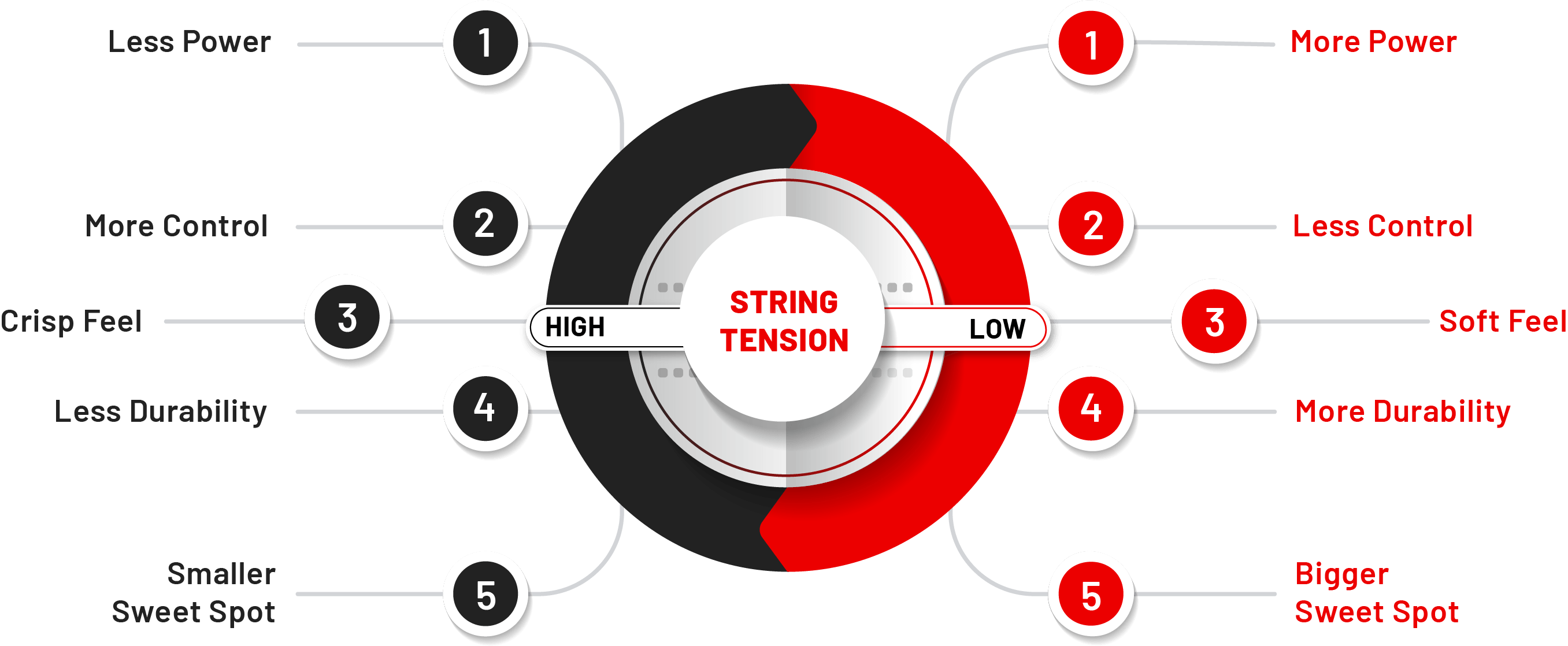
String tension is the amount of force used to pull and secure the strings onto a racket’s frame. It is measured in either pounds (lbs) or kilograms (kg), and even a small change can make a noticeable difference on the court. This measurement determines how tight or loose the strings feel once the racket is strung. It’s also important to note that string tension affects the size and responsiveness of the sweet spot, the area on the string bed that delivers the most effective contact with the ball or shuttle. The string tension affects four key factors: power, control, feel, and durability. Here is a brief overview of how string tension influences key performance factors:
Following are the details of string tension for popular racket sports such as tennis, badminton, and squash. This guide is helpful whether you are new to racket sports or play them occasionally.
In tennis, players of different levels prefer different string tensions. Most players fall within the 40 to 65 lbs range, but minor adjustments within that window can make a noticeable difference, depending on your skill level, playing style, and physical needs.
High Tension (55–65 lbs)Tighter strings offer more control, especially for players who generate their own power. This is typically preferred by:
High tension provides a firmer, more connected feel. It is great for placing shots accurately and keeping them within the lines, but it comes at the cost of a smaller sweet spot and less forgiveness on off-centre hits.
Low Tension (40–54 lbs)
Lower tension provides more power because the strings deflect more, creating a trampoline effect. This setup is generally better suited to:
During badminton rallies, rackets respond differently with different string tensions. A comprehensive understanding of the impact of string tension enhances performance and reduces injury risk, especially in net control, smashes, and defensive lifts. The typical range is 18 to 30 lbs, but where you fall within depends heavily on your technique and playing level.
High Tension (24–30 lbs)
Higher tension offers greater control and a sharper response, but with a tighter sweet spot. This setup is ideal for:
However, it is unforgiving. If you mishit even slightly, the lack of power support from the strings becomes obvious. It also places more strain on the arm and wrist, especially in long matches or fast-paced doubles games.
Low Tension (18–23 lbs)
Lower tension creates a larger sweet spot and more of a trampoline effect, giving players easier access to power. This setup works well for:
In squash, string tension plays a subtle yet crucial role in the performance of your racket. It is a fast-paced and close-quartered game. Tension does not work in isolation in squash; rather, the racket’s throat, pattern, and density amplify or dampen its effect.
Most squash rackets are strung between 20 lbs to 30 lbs, with small changes in tension offering noticeable differences in control, power, and feel.
High Tension (26–30 lbs)
At higher tensions, the string bed is tighter, which delivers greater control and a more connected touch. This is typically favoured by:
Choosing the correct string tension is not just about technical specs. It is about understanding your game, your body, and your goals on the court. Whether you are swinging a tennis, badminton, or squash racket, your string tension directly impacts power, control, comfort, and confidence. While higher tensions favour precision and feedback, lower tensions offer easier power and a more forgiving feel. The best setting depends on what complements the playing style and skill level. Start with the recommended range for your sport, experiment within it, and pay attention to how your racket responds.